On a weeknight when everyone wanted lasagna but I didn’t have time to layer and bake, I made lasagna soup and kept calling it “the same thing, but in a pot.” This lasagna soup brings that familiar tomato-meat-cheese combo into one simmering pot with the comfort of broken lasagna noodles and scoopable ricotta. I tested the timing so the noodles finish just right and the broth stays thick instead of thin—read on for the cues that helped me fix the mushy-noodle problem the first time.
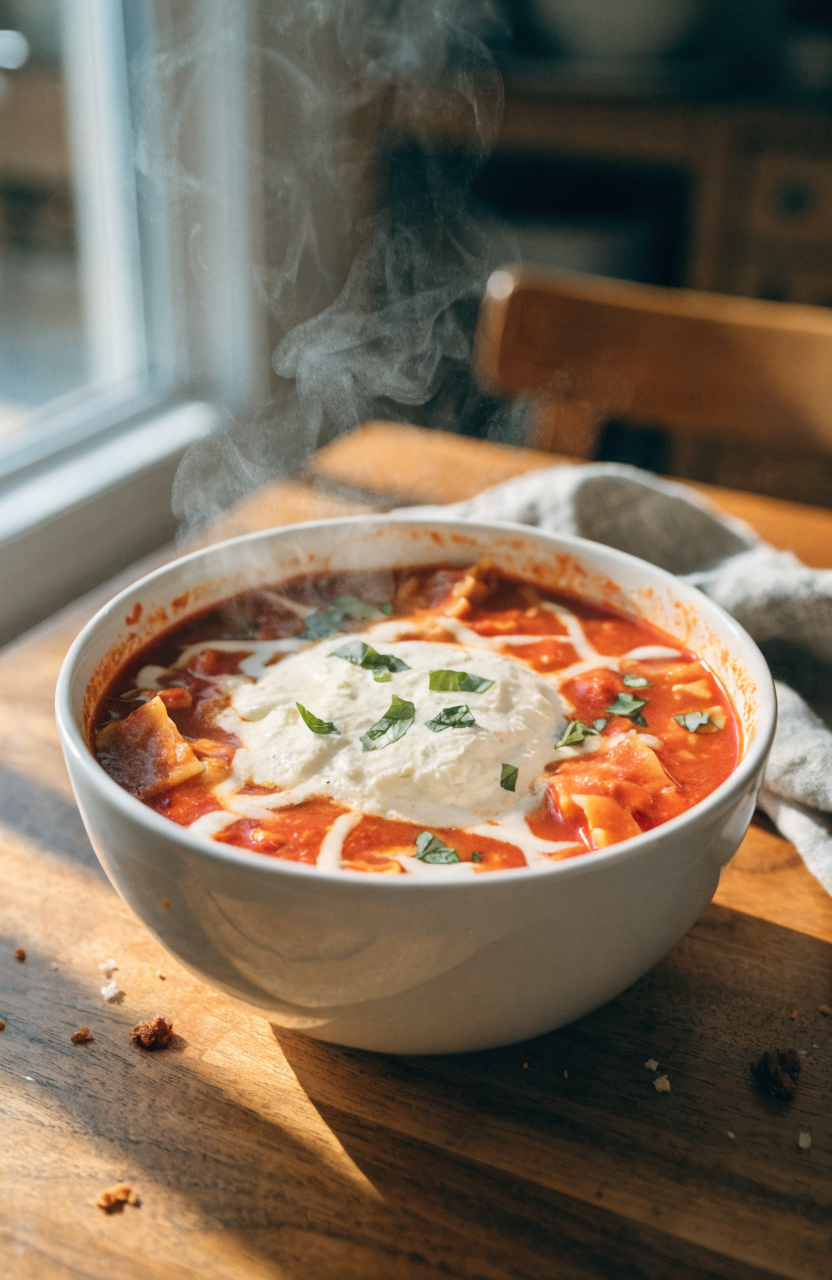
Why this lasagna soup works
The key technique is twofold: first, developing deeper flavor by browning the meat and toasting the tomato paste briefly before adding liquids; second, adding lasagna noodles late so they cook to al dente in the hot broth instead of going soft while the soup simmers. In testing, my first attempt simmered the noodles with the broth from the start and the result was a starchy, gummy soup. What changed was adding the noodles only during the final 10 minutes and lowering the simmer to a gentle bubble—this keeps the broth saucy and the noodles separated.
The ingredient ratio also matters: roughly equal parts canned tomatoes and beef broth keeps the soup saucy without being thin, while a smaller amount of tomato paste concentrates the tomato flavor. A final handful of shredded mozzarella and a spoon of ricotta per bowl recreate the layered-cheese feeling of lasagna without weighing down the pot.
Key takeaways
- Brown the meat and bloom tomato paste for a richer, less watery broth.
- Add broken lasagna noodles in the last 8–12 minutes to avoid mushy pasta.
- Finish bowls with ricotta and mozzarella for that layered-cheese texture without baking.
Ingredients you’ll need and what to substitute
This lasagna soup uses common grocery items: ground beef, canned tomatoes, lasagna noodles that you break by hand, and a simple mix of Italian dried herbs. If you prefer poultry, swap ground turkey or ground chicken but brown it in two batches so it gets color. For a pantry-friendly option, use a 14-ounce can of fire-roasted tomatoes for a smokier flavor, or replace one cup of beef broth with low-sodium chicken broth if that’s what you have. If ricotta is hard to source, a spoonful of sour cream or plain Greek yogurt stirred into each bowl gives a creamy finish, though the flavor will be tangier.
Measure the lasagna noodles roughly by weight or by counting: a standard 16-ounce box will work for this recipe; you’ll use about two-thirds of the box broken into pieces. If you must use dried spaghetti in a pinch, break it crosswise and add it at the same late stage but expect slightly different texture.
Equipment
I cooked this in a 5.5- to 6-quart wide pot or Dutch oven so there’s room to brown meat and simmer evenly; a 12-inch skillet works for browning if you want fewer dishes, but transfer browned meat to a larger pot for the broth. Use a wooden spoon and a ladle for serving. If you plan to finish under a broiler for a bubbly top (optional), use an ovenproof Dutch oven or transfer bowls to an oven-safe dish carefully.
How to make lasagna soup
Prepare the base
Start by heating 1 tablespoon of olive oil in a 6-quart Dutch oven over medium-high. Add the chopped onion and cook until softened, about 4 minutes. Push the onion to the side and add the ground beef, breaking it into pieces. Cook until well-browned in spots, about 6–8 minutes total; do not rush this step—browning creates flavor. Stir in the minced garlic and cook 30 seconds. Add the tomato paste and stir for 1 minute to toast and deepen its flavor; you’ll see the paste darken slightly and smell richer—this is the bloom that prevents a flat tomato taste.
Build the soup
Pour in the crushed tomatoes, beef broth, dried oregano, dried basil, bay leaf, a pinch of red pepper flakes if using, salt, and pepper. Stir to combine and scrape any browned bits from the bottom of the pot. Bring the soup to a simmer, then reduce heat to maintain a gentle simmer for 15–20 minutes so flavors meld. Taste and adjust salt near the end of this phase.
Finish with noodles and cheese
Break the lasagna noodles into roughly 2-inch pieces and add them to the simmering soup during the last 8–12 minutes, stirring occasionally to prevent sticking. Cook until the pasta is al dente—tender but with a little bite. Remove the bay leaf. Turn off heat and stir in 1/2 cup grated Parmesan to thicken slightly. Serve hot with a spoonful of ricotta and a sprinkle of shredded mozzarella on each bowl; the heat will soften the cheeses into the broth and create a layered cheesy texture.
Most important mistake to avoid: adding the noodles at the start. That leads to overcooked, starchy pasta and a cloudy, gummy broth. The final version works because the noodles and cheese are timed to finish right at serving time.
Things I learned the hard way
- If you skip browning the meat, the soup tastes flatter; small brown bits (fond) are an easy flavor source.
- Tomato paste needs that short toast to avoid a sugary, one-dimensional tomato flavor.
- Adding noodles too early makes the broth thick and gummy; add them in the last 8–12 minutes only.
- Using lower-sodium broth lets you control salt late in the process; taste before seasoning heavily.
- My first batch was too watery because I used only canned tomatoes without paste—adding 2 tablespoons of paste fixed the texture.
Variations to try
- Vegetable-forward: Swap half the beef for finely chopped mushrooms and grated zucchini; sauté the veggies with the onion and reduce the broth by 1/2 cup so the soup stays saucy.
- Spicy Italian: Use spicy Italian sausage instead of plain ground beef and skip the red pepper flakes; brown the sausage well and reduce added salt.
- Cheesy bake finish: If you want a bubbly topping, ladle soup into an ovenproof dish, top with shredded mozzarella, and broil 2–3 minutes until browned—watch closely to avoid burning.
Storage, freezing, and reheating
Refrigerate leftover lasagna soup in airtight containers for up to 3–4 days. Because the noodles absorb liquid over time, store broth and noodles separately if possible: cool the soup quickly and transfer the broth to one container and cooked noodles to another. To reheat, warm the broth on the stove to a simmer and add the noodles for 1–2 minutes to loosen; then assemble bowls with fresh ricotta or mozzarella. You can freeze the soup (without ricotta) for up to 3 months—freeze it with the noodles removed or expect softer pasta after thawing. Thaw overnight in the refrigerator and reheat on the stove, adding a splash of broth if the texture seems thickened.
When packing for lunch, choose a sturdy container and store the broth separately from the pasta and cheese to preserve texture. A short stovetop refresh while the pasta warms keeps the dish tasting freshly made. If you need to stretch the meal, add a handful of spinach or a cup of thinly sliced cabbage to the broth when reheating; the greens wilt quickly and add volume without masking the core flavors.
What to serve with lasagna soup
Good pairings include a simple green salad with vinaigrette, garlic bread or toasted baguette slices, roasted broccoli, or a light Italian-style slaw. For kids, serve with buttered breadsticks and a side of raw carrot sticks. These sides balance the warm, saucy soup and make the meal feel complete for a family dinner.
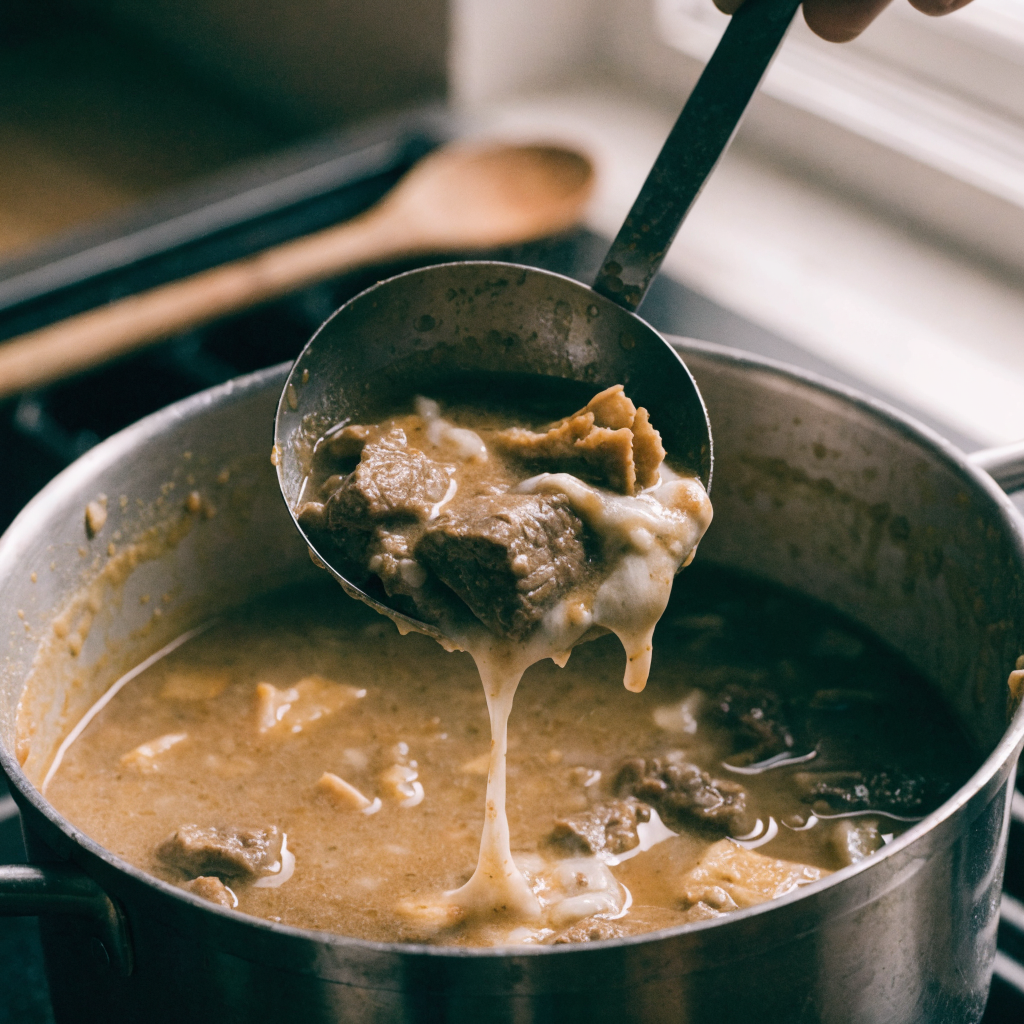

Hearty Lasagna Soup with Ricotta and Mozzarella
Ingredients
Equipment
Method
- Heat the olive oil in a 6-quart Dutch oven over medium-high heat, add the chopped onion, and cook until soft, about 4 minutes.
- Add the ground beef and cook, breaking it up, until well browned with some darker bits, 6–8 minutes; drain excess fat if desired.
- Stir in the minced garlic and cook 30 seconds, then add the tomato paste and stir constantly for 1 minute until it darkens and smells richer.
- Add the crushed tomatoes, beef broth, dried oregano, dried basil, bay leaf, red pepper flakes if using, and 1/4 cup of the grated Parmesan; stir and bring to a gentle simmer.
- Reduce heat to maintain a low simmer and let cook, uncovered, for 15–20 minutes to blend flavors, stirring occasionally and skimming any foam.
- During the last 8–12 minutes of simmering, add the broken lasagna noodles and stir occasionally to prevent sticking; cook until al dente.
- Remove the bay leaf, taste, and season with salt and pepper as needed; stir in remaining Parmesan.
- Ladle soup into bowls and top each serving with a spoonful (about 2 tablespoons) of ricotta and a sprinkle of shredded mozzarella. Garnish with fresh basil or parsley if desired and serve immediately.
Notes
Frequently asked questions
Can I make lasagna soup ahead of time? Yes, but store the noodles separately if you can; assembling right before serving preserves the noodle texture. If assembled, expect softer pasta after refrigeration.
Can I use ground turkey instead of beef? Yes—ground turkey works well but brown it in a hot pan so it gets some color; you may need an extra minute or two for browning and a little extra seasoning.
Is this soup freezer-friendly? The broth and meat freeze well, but cooked pasta softens in the freezer. Freeze broth separately if you want the best texture; thaw overnight before reheating and add fresh noodles while warming.
How do I keep the soup from getting watery? Brown the meat, toast the tomato paste, and avoid adding too much extra liquid. Adding grated Parmesan at the end helps bind and thicken the broth slightly.
Can I use no-boil lasagna noodles? Yes—break them and add at the same late stage; cooking time may be similar, but test for doneness because brands vary.
Closing
This lasagna soup delivers the layered flavors of classic lasagna with much less fuss—the browned meat and late-added noodles are the two changes that made all the difference in my tests, giving a saucy, family-friendly bowl that holds up as leftovers when you plan ahead. Serve with a simple side and save extra broth separately if you want to preserve the best texture for later meals.

Leave a Reply