I remember the first time I tried to fold whole peaches into scone dough and ended up with a sticky, underbaked center — lesson learned. These peach scones turn that mistake into a better approach: by lightly macerating diced fresh peaches and draining excess juice, then using a small amount of cream cheese and cold butter for a tender, flaky crumb, you get reliably soft, not soggy, scones. If you’re hunting for an easy summer breakfast the whole family will reach for, these peach scones are what I make most often.

Why this peach scones works
The trick that makes these peach scones work is controlling the fruit moisture and balancing fat types. Fresh peaches add fantastic flavor but a lot of water; by tossing diced peaches with a touch of sugar and letting them sit briefly, then draining away the run-off, you preserve peach flavor without adding excess liquid that collapses scones while baking. I also use a small amount of cream cheese along with cold butter. The cream cheese keeps the crumb tender and adds a subtle tang that pairs with peach sweetness, while the cold butter creates the little pockets of flake we want. Finally, a short chill before baking helps the dough relax and gives cleaner edges without overworking the flour.
Key takeaways
- Lightly macerate and drain peaches to prevent soggy scones.
- Cold butter plus a little cream cheese yields a tender, flaky texture.
- Chilling the dough briefly helps shape and maintain height during baking.
Ingredients you’ll need and what to substitute
I keep the ingredient list short and mostly familiar so this fits the family-friendly pantry. Fresh, ripe peaches are the star — choose firm but fragrant peaches to avoid excess juice. If peaches are very soft, use slightly less or pat them drier after dicing. I use all-purpose flour, granulated sugar, baking powder and baking soda for lift, and a combination of cold unsalted butter and cream cheese; the latter can be swapped with full-fat Greek yogurt if you prefer a milder tang and slightly lower fat, but the texture will be marginally different. Heavy cream helps make the dough tender; you can substitute whole milk plus 1 tablespoon melted butter per 1/4 cup if needed, but the finished scones will be slightly less rich.
For the glaze I use powdered sugar, a splash of heavy cream, and a little vanilla — optional, but it keeps the scones from feeling dry after a day or two. If you want to skip added sugar, brush the scones with a simple milk wash and sprinkle coarse sugar before baking for a crunchy top.
Equipment
You don’t need fancy tools: a 9-inch round baking sheet or a standard rimmed sheet pan, a pastry cutter or fork (or a box grater to grate cold butter), a 1-quart mixing bowl, and a spatula are all that’s required. A bench scraper helps cut the dough into wedges cleanly. If you have a food processor, it speeds the cutting of butter into flour but isn’t necessary.
How to make peach scones
Prepare the peaches
Start by washing, peeling if desired, and dicing 1 large ripe peach (about 1 cup diced). Toss the diced peach with 1 teaspoon sugar and let it sit in a small bowl for 10 minutes to macerate; then spoon the peaches into a fine-mesh sieve set over a bowl and let excess juice drain for 5–10 minutes. Press gently — you want flavor but not wetness. Reserve any drained juice for ice tea, not the dough.
Make the dough
Preheat the oven to 400°F and line a rimmed baking sheet with parchment. In a large bowl, whisk together 2 cups all-purpose flour, 1/4 cup granulated sugar, 2 teaspoons baking powder, 1/2 teaspoon baking soda, and 1/2 teaspoon fine salt. Grate 6 tablespoons cold unsalted butter on the large holes of a box grater directly into the flour mixture (or cut into small cubes and use a pastry cutter). Grating helps keep butter pieces cold and small for flakiness. Stir the butter briefly with a fork until it’s pea-sized. Cut 2 ounces (1/4 cup) cold cream cheese into small cubes and gently toss into the flour mixture so it stays cold and distributed.
In a separate small bowl, whisk 2/3 cup heavy cream with 1 large cold egg and 1 teaspoon vanilla extract. Make a well in the dry ingredients and pour in the cream mixture. Stir gently with a wooden spoon until the dough starts to come together — it will be shaggy. Fold in the drained diced peaches with one or two quick strokes; avoid overmixing, which develops gluten and dries scones.
Shape and chill
Turn the dough out onto a floured surface and pat into an 8-inch round about 1-inch thick. Use a bench scraper or a sharp knife dusted with flour to cut the round into 8 wedges. Transfer wedges to the prepared sheet, spacing them 1 to 2 inches apart. For even rise, chill the shaped scones in the refrigerator for 15 minutes; this firms the butter so the dough holds its shape under oven heat.
Bake and finish
Brush the tops with a little heavy cream or milk and sprinkle with 1 tablespoon coarse sugar if desired. Bake at 400°F for 16–20 minutes until the tops are golden and a toothpick inserted at the center comes out clean or with a few moist crumbs. Cool on the sheet for 5 minutes, then transfer to a wire rack. If glazing, wait 10 minutes then drizzle with a simple glaze made from 1 cup powdered sugar, 2 tablespoons heavy cream, and 1/2 teaspoon vanilla, thinning with more cream if needed.
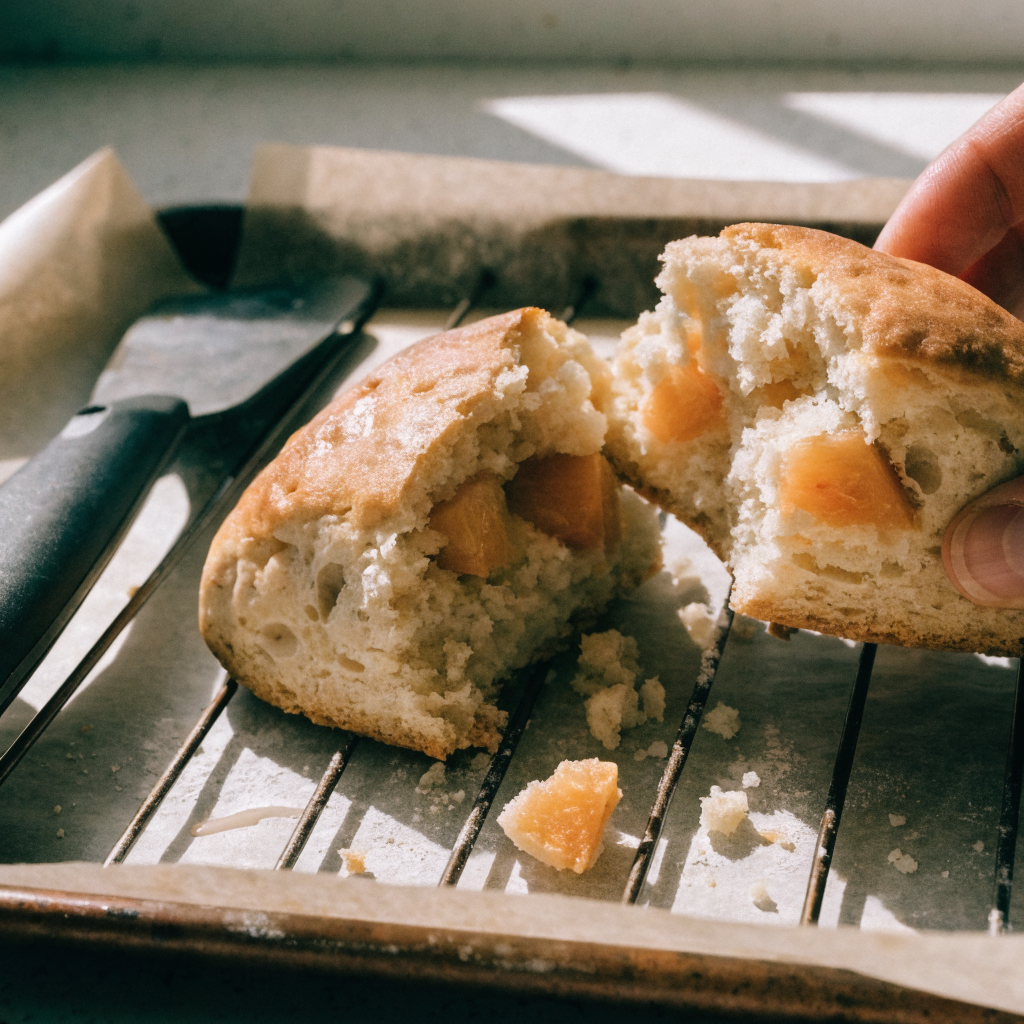
Serve warm or at room temperature. The scones smell faintly of peaches and vanilla, with a tender interior and just-crisp edges.
Things I learned the hard way
- If you fold in peaches without draining, the scones spread and bake unevenly — always macerate and drain briefly.
- Using only butter made my first batch too dry; adding cream cheese fixed the texture by keeping crumbs tender.
- Cutting butter into very small pieces (grating helps) gives better rise than large chunks because the butter is distributed more evenly.
- Chilling shaped scones for just 10–15 minutes gives cleaner wedges and taller scones; skip this and the edges flatten.
- Don’t overwork the dough: stop mixing when the pieces just hold together to avoid dense scones.
Variations to try
1) Peach-Blueberry Scones: Add 1/2 cup fresh blueberries to the drained peaches and reduce peaches to 3/4 cup; bake as directed but watch for slightly longer bake time (18–22 minutes). 2) Honey-Almond Scones: Replace half the granulated sugar with 2 tablespoons honey and fold in 1/4 cup sliced almonds; brush with honey glaze after baking. 3) Lemon-Peach Scones: Add 1 tablespoon grated lemon zest to the dry ingredients and swap vanilla for lemon extract (1/4 teaspoon); finish glaze with 1 teaspoon lemon juice for a brighter flavor. Each variation may add a minute or two to baking time if the fruit quantity increases.
Storage, freezing, and reheating
Store cooled scones in an airtight container at room temperature for up to 2 days. If you glaze, place parchment between layers to prevent sticking. For longer storage, freeze unglazed scones on a tray until solid, then transfer to a freezer bag for up to 2 months. To reheat from frozen, unwrap and place on a baking sheet in a 350°F oven for 12–16 minutes until warmed through; glazes are best applied after reheating. Reheating in a microwave softens texture but is faster—microwave for 20–30 seconds from thawed. Expect a slight loss of crispness on the exterior after refrigeration or freezing; a quick reheat in the oven restores it.
What to serve with peach scones
These peach scones pair well with simple morning or afternoon accompaniments: a bowl of Greek yogurt with honey and granola, a light fruit salad, or a warmed berry compote. For beverages, serve with strong coffee, cold-brew, or iced tea. For a brunch spread, include scrambled eggs or a sheet-pan frittata to make the scones part of a heartier meal.

Fresh Peach Scones
Ingredients
Equipment
Method
- Wash, peel if desired, and dice the peach to yield about 1 cup; toss with 1 teaspoon granulated sugar and let sit 10 minutes, then drain in a fine-mesh sieve over a bowl for 5–10 minutes.
- Preheat oven to 400°F and line a rimmed baking sheet with parchment. In a large bowl whisk together flour, 1/4 cup sugar, baking powder, baking soda, and salt.
- Grate or cut cold butter and add to the dry ingredients, working it in with a fork or pastry cutter until pieces are the size of peas; add cream cheese cubes and toss briefly to keep cold.
- Whisk heavy cream, egg, and vanilla in a small bowl; pour into dry ingredients and stir gently until the dough just comes together, then fold in drained peaches with one or two quick motions.
- Turn dough onto a lightly floured surface, pat into an 8-inch round about 1-inch thick, and cut into 8 wedges. Transfer wedges to the prepared sheet and chill for 15 minutes.
- Brush tops with 1–2 tablespoons heavy cream and sprinkle coarse sugar if desired. Bake at 400°F for 16–20 minutes until golden and a toothpick comes out clean. Cool 5 minutes on the sheet then move to a wire rack.
- Whisk powdered sugar, 2 tablespoons heavy cream, and vanilla to a drizzling consistency and spoon over warm scones after 10 minutes. Let glaze set before stacking.
Notes
Frequently asked questions
Can I use frozen peaches? Yes, but thaw and drain them thoroughly and pat dry; frozen peaches release more water and can make the dough too wet if used straight from the freezer.
Why are my scones dense? Density usually comes from overmixing or using too much liquid; fold until just combined and measure liquids carefully.
Can I make the dough ahead? You can shape the scones and refrigerate the pan, covered, for up to 8 hours before baking; add a couple extra minutes to the bake time.
Do I have to use cream cheese? No; you can substitute full-fat Greek yogurt (use the same weight) but expect a slightly less rich flavor.
How do I know when scones are done? Look for golden tops and slightly firm centers; a toothpick should come out with a few moist crumbs and not raw dough.
Can I skip the glaze? Yes — the glaze helps keep them moist after a day, but fresh from the oven they’re delicious without it.
Closing
These peach scones give you tender, flavorful scones that hold up well for a family breakfast or a relaxed afternoon snack; control the fruit moisture, keep the butter cold, and you’ll have consistent results. I still make small changes depending on how ripe my peaches are, but the core technique keeps the scones light and peach-forward every time.


Leave a Reply