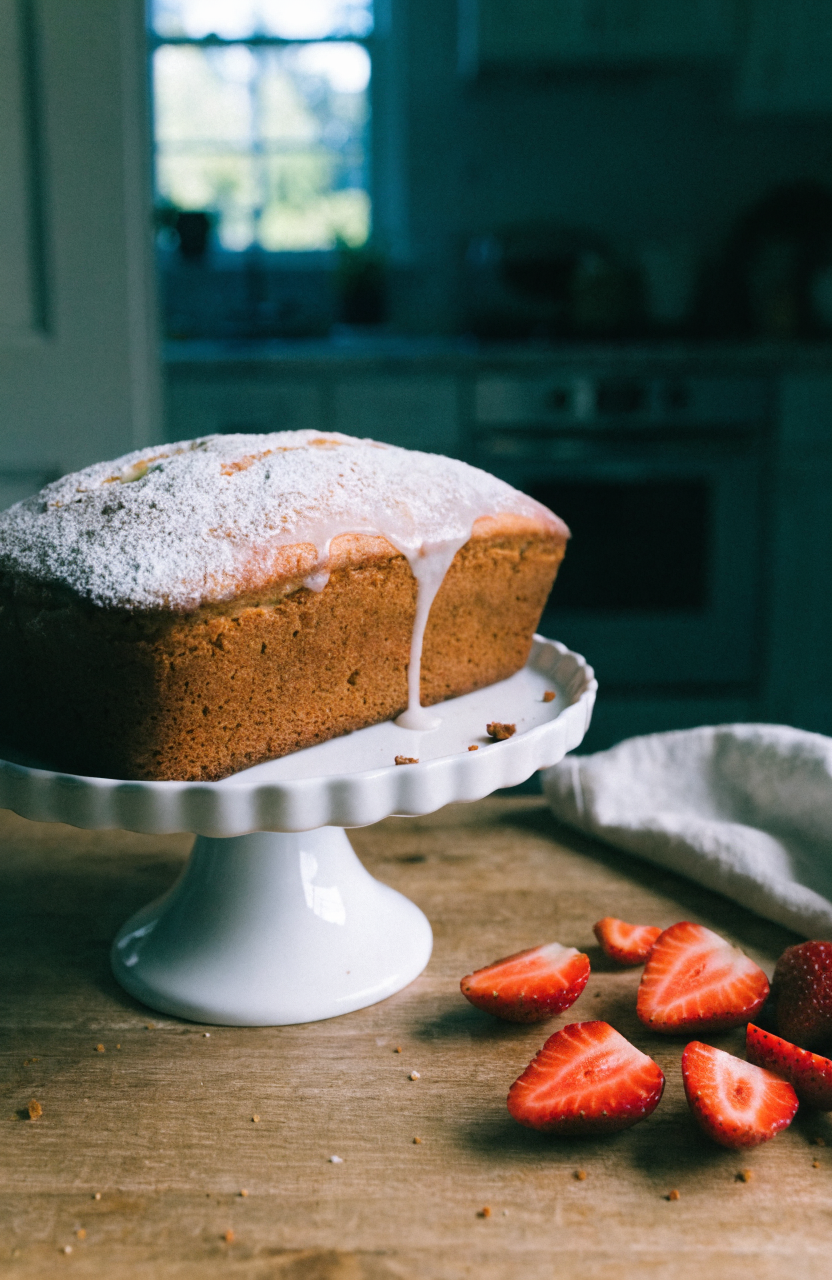
I baked this strawberry pound cake after a busier-than-usual Saturday when I found a flat of strawberries marked down at the grocery; the first bite proved that fresh strawberries brighten a dense cake without watering it down. The cake comes together mostly in one bowl, and the glaze deepens the strawberry flavor so each slice stays moist and family-friendly.
Why this strawberry pound cake works
The key technique in this strawberry pound cake is a careful balance between classic pound cake structure and the added moisture from fresh berries. Traditional pound cakes rely on a 1:1:1:1 ratio of butter, sugar, eggs, and flour for tight crumb and rich flavor; adding fresh fruit can introduce extra water and weigh the batter down. What I did differently was macerate and drain most of the berry juices, then fold in a loosely crushed portion of berries and a small amount of strained juice into the glaze instead of the batter. That preserves the cake’s crumb while still delivering strawberry flavor throughout. During testing I also reduced oven temperature slightly and extended baking time by a few minutes to avoid a dark crust with an underbaked center, which fixed the raw middle I hit on my first attempt.
Key takeaways
- Macerating then draining berries prevents a soggy batter while keeping flavor.
- Lower oven heat and longer bake time help this dense cake cook evenly.
- A thin strawberry glaze adds moisture without collapsing the crumb.
Ingredients you’ll need and what to substitute
I used everyday grocery items you can find at most stores. Fresh strawberries give the best flavor and color; if strawberries are out of season, use frozen but thaw and drain them thoroughly before measuring. Unsalted butter and room-temperature eggs keep the batter consistent — if you only have salted butter, reduce added salt by 1/4 teaspoon. Sour cream or full-fat plain yogurt adds moisture and a slight tang; you can substitute plain yogurt cup-for-cup but the texture will be a touch less tender. If you need a lower-sugar option, reduce granulated sugar by 1/4 cup but expect a slightly denser crumb and less browning.
Equipment
The right pan and tools matter here: a 9×5-inch loaf pan produces an even, sliceable loaf; a stand or hand mixer makes creaming easier but a whisk and elbow grease also work. Use a wire rack for cooling and an offset spatula or small whisk for glazing. If you only have an 8.5×4.5-inch pan, the cake will be taller and may need 5–10 minutes more baking time.
How to make the cake
Prepare the strawberries
Start by rinsing, hulling, and patting dry 1 cup of strawberries; reserve another 3/4 cup for folding into the batter. Place 1 cup of sliced strawberries in a bowl with 1 tablespoon sugar and let them sit 15–20 minutes to macerate, then pour off and reserve any liquid. Lightly mash half of the macerated berries into a coarse purée; for the rest, gently chop into small pieces. Strain the released juices through a fine-mesh sieve and reserve about 2 tablespoons for the glaze; discard any excess watery liquid. This step concentrates the berry flavor without adding too much extra water to the cake batter.
Make the batter
Preheat the oven to 325°F and grease and flour a 9×5-inch loaf pan or line it with parchment. In a large bowl, cream 1 cup (2 sticks) unsalted butter at room temperature with 1 1/2 cups granulated sugar until pale and fluffy, about 3–4 minutes with a mixer. Add 4 large eggs, one at a time, beating each in until incorporated and scraping the bowl between additions. Stir in 1 teaspoon vanilla extract and 1/2 teaspoon lemon zest for brightness. In a separate bowl, whisk together 2 1/4 cups all-purpose flour, 1/2 teaspoon baking powder, and 1/2 teaspoon fine salt. In a measuring cup, whisk 1/2 cup sour cream with 1/4 cup whole milk.
On low speed, add the dry ingredients to the butter mixture in three additions, alternating with the sour cream mixture, beginning and ending with the dry ingredients. Mix only until just combined to avoid overworking the batter. Gently fold in the chopped macerated strawberries and the mashed purée with a spatula, distributing fruit without smashing the batter. The batter will be thick but pourable; scrape it into the prepared loaf pan and smooth the top with an offset spatula.
Bake and cool
Bake at 325°F for 55–65 minutes, or until the top is golden and a toothpick inserted into the center comes out with a few moist crumbs (avoid wet batter). If the top browns too quickly, tent with foil for the last 10–15 minutes. Remove the pan to a wire rack and let the cake cool in the pan 15 minutes, then run a knife around the edge and invert onto the rack to cool completely, at least another 45 minutes. Cooling fully before glazing helps the glaze set instead of sliding off.
Make the glaze and finish
Whisk 1 cup powdered sugar with 2 tablespoons reserved strained strawberry juice and 1–2 teaspoons milk until smooth and pourable. If using fresher, less-sweet strawberries, add up to 1 tablespoon lemon juice to brighten the glaze. Drizzle over the cooled loaf and let the glaze set for 15–20 minutes before slicing. For a sparkly finish, scatter a few thin strawberry slices or coarse sugar on the wet glaze.
Things I learned the hard way
- Don’t add raw berry juices straight into the batter — it thinned the first loaf I made and made the center gummy; macerating and draining fixed that.
- If your oven runs hot, lower the temperature by 15–25°F and expect a longer bake time; a shiny, deeply browned exterior often means the inside needs more time.
- Room-temperature eggs and butter cream together more evenly; cold ingredients yield a lumpy batter and dense cake.
- Tent with foil if the top is browning too fast; this prevented a thick hard crust on later bakes.
- Patience matters — allow the cake to cool fully before glazing or the glaze will run off, leaving an unappealing drip pattern.
Variations to try
For a swirl effect, reserve 1/4 cup of thin strawberry purée and drop spoonfuls onto the batter surface before baking, then swirl gently with a skewer; expect slightly more pink streaks and a touch of extra moisture, so add 3–5 extra minutes to baking time. Swap half the all-purpose flour for cake flour for a softer crumb, and reduce mixing slightly to retain tenderness. Add 1/2 cup chopped white chocolate to the batter for a sweeter variation; fold it in last and reduce baking time by 3–5 minutes if the loaf seems to rise higher. For a lemon-strawberry twist, increase lemon zest to 1 tablespoon and add 1 tablespoon lemon juice to the glaze.
Storage, freezing, and reheating
Store leftover strawberry pound cake at room temperature, wrapped tightly in plastic or in an airtight container, for up to 3 days. For longer storage, tightly wrap the cooled cake in two layers of plastic wrap and freeze for up to 3 months; thaw overnight in the refrigerator while still wrapped to preserve moisture. Reheat individual slices in a 325°F oven for 8–10 minutes or a microwave for 15–20 seconds; expect a slightly softer texture after refrigeration or freezing, which the glaze helps restore.
What to serve with strawberry pound cake
This strawberry pound cake pairs well with a simple bowl of fresh mixed berries, a scoop of vanilla ice cream for a casual dessert, or lightly whipped cream with a splash of vanilla for a weekend treat. For brunch, serve slices alongside coffee cake, scrambled eggs, or a fruit salad to round out the meal.
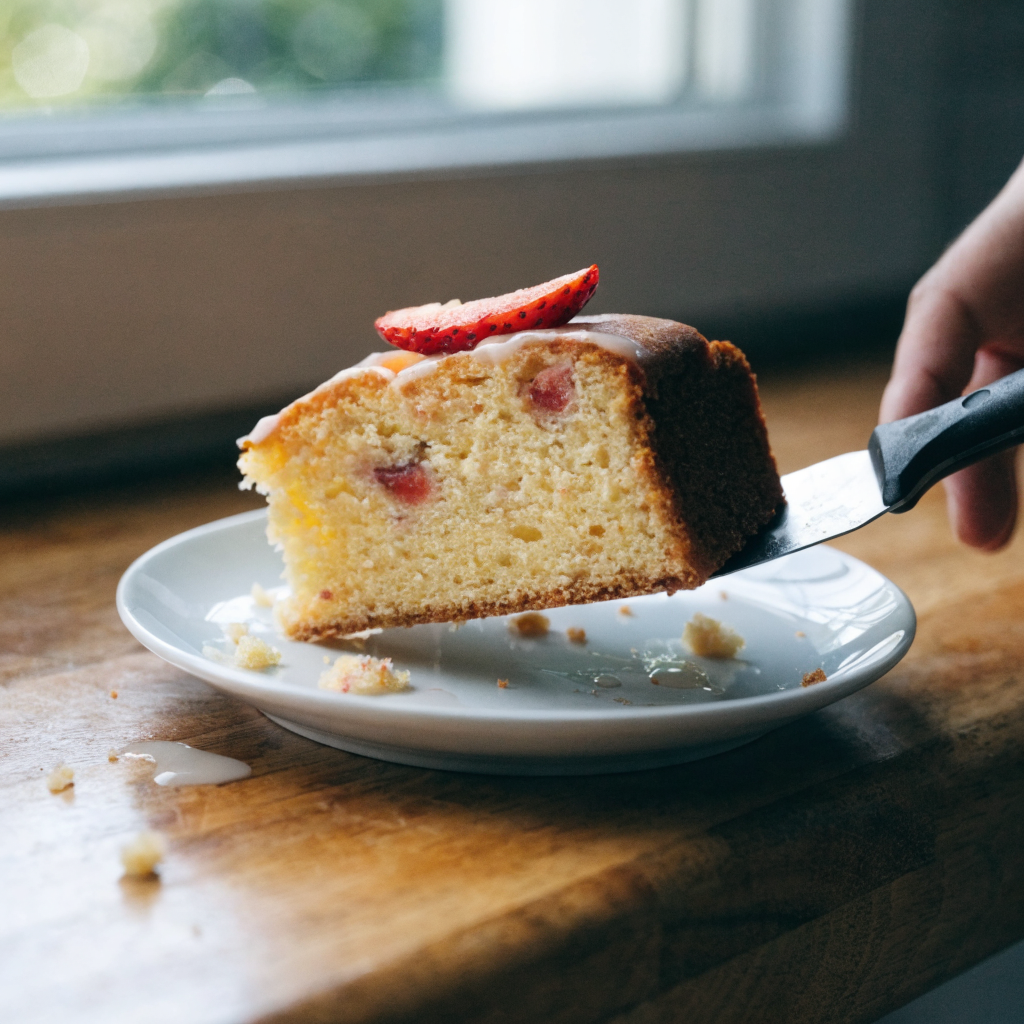

Strawberry Pound Cake
Ingredients
Equipment
Method
- Place 1 cup sliced strawberries with 1 tablespoon sugar in a bowl and let sit 15–20 minutes to macerate; strain and reserve about 2 tablespoons of juice for the glaze, then lightly mash half of the macerated berries and chop the rest.
- Preheat oven to 325°F and grease and flour a 9×5-inch loaf pan or line with parchment.
- Cream 1 cup butter with 1 1/2 cups sugar until pale and fluffy, about 3–4 minutes; add eggs one at a time, mixing well after each addition, then stir in 1 teaspoon vanilla and 1/2 teaspoon lemon zest.
- Whisk together 2 1/4 cups flour, 1/2 teaspoon baking powder, and 1/2 teaspoon salt in a separate bowl; whisk 1/2 cup sour cream with 1/4 cup milk in another measuring cup.
- Add dry ingredients to the butter mixture in three parts, alternating with the sour cream mixture and beginning and ending with the dry ingredients; mix just until combined.
- Fold in the chopped and mashed macerated strawberries gently, then transfer the batter to the prepared loaf pan and smooth the top.
- Bake at 325°F for 55–65 minutes, or until a toothpick inserted into the center comes out with a few moist crumbs; tent with foil if the top browns too quickly.
- Cool the pan on a wire rack for 15 minutes, then remove the cake from the pan and cool completely on the rack, about 45 minutes.
- Whisk 1 cup powdered sugar with 2 tablespoons reserved strawberry juice and 1–2 teaspoons milk until smooth and pourable; drizzle over the cooled loaf and let set for 15–20 minutes before slicing.
Notes
Frequently asked questions
Can I use frozen strawberries in this strawberry pound cake? Yes; thaw and drain frozen strawberries thoroughly and pat them dry before macerating to avoid excess liquid in the batter. Frozen berries often release more water, so be extra diligent when draining.
How do I know when the center is done? Use a toothpick or thin skewer — it should come out with a few moist crumbs rather than wet batter, and the cake should spring back slightly when pressed gently in the center.
Can I double the recipe? Yes, but bake in two pans rather than one oversized pan; a single doubled loaf may not bake evenly. Alternatively, use two 9×5 pans and reduce bake time by a few minutes, checking doneness early.
Can I make this recipe in a bundt pan instead of a loaf pan? You can, but adjust bake time and watch for doneness; use a 10–12-cup bundt pan and expect the cake to need an extra 10–15 minutes in the oven.
How long does this strawberry pound cake keep? At room temperature in an airtight container, it keeps well for up to 3 days; freeze wrapped tightly for up to 3 months.
Why did my pound cake sink in the middle? Sinking often results from underbaking, opening the oven door too early, too much leavening, or an oven temperature that’s too low or too high; measure ingredients carefully and avoid checking during the first 40 minutes.
Closing
This strawberry pound cake balances a dense, sliceable loaf texture with bright berry flavor and a light glaze, making it a dependable dessert for family gatherings and weekend baking when you want a straightforward cake that’s both pretty and flavorful. Cool the loaf fully before glazing, store slices wrapped tightly to maintain moisture, and enjoy within a few days or freeze for longer keeping.


Leave a Reply